Inheritance in Spain: What Scandinavian Heirs Need to Know
Introduction
Inheritance matters involving Spain often come as a surprise for Scandinavian families.
Many heirs assume that the process will be straightforward, similar to Denmark, Sweden or Norway. In practice, Spanish inheritance law works very differently — and these differences can have significant legal and tax consequences.
This article explains the key issues Scandinavian heirs should understand when dealing with an inheritance involving Spain.
Inheritance in Spain Is Not Automatic
One of the most important differences is that inheritance in Spain does not transfer automatically upon death.
Even if heirs are clearly identified under a will or foreign law, they must formally accept the inheritance before a Spanish notary. Until this happens, assets located in Spain cannot be registered, sold or transferred.
This requirement applies regardless of:
- the nationality of the deceased
- the nationality of the heirs
- whether the inheritance was handled abroad
This is a frequent source of confusion for Scandinavian heirs.
Read also: Spanish Inheritance Is Not Automatic: A Key Difference for Nordic Families
Which Law Applies to a Spanish Inheritance?
Determining the applicable law is a crucial first step.
In cross-border cases involving Spain and Scandinavia, the applicable law depends on factors such as:
- the deceased’s habitual residence
- nationality
- whether a valid choice of law was made in a will
- whether EU regulations apply
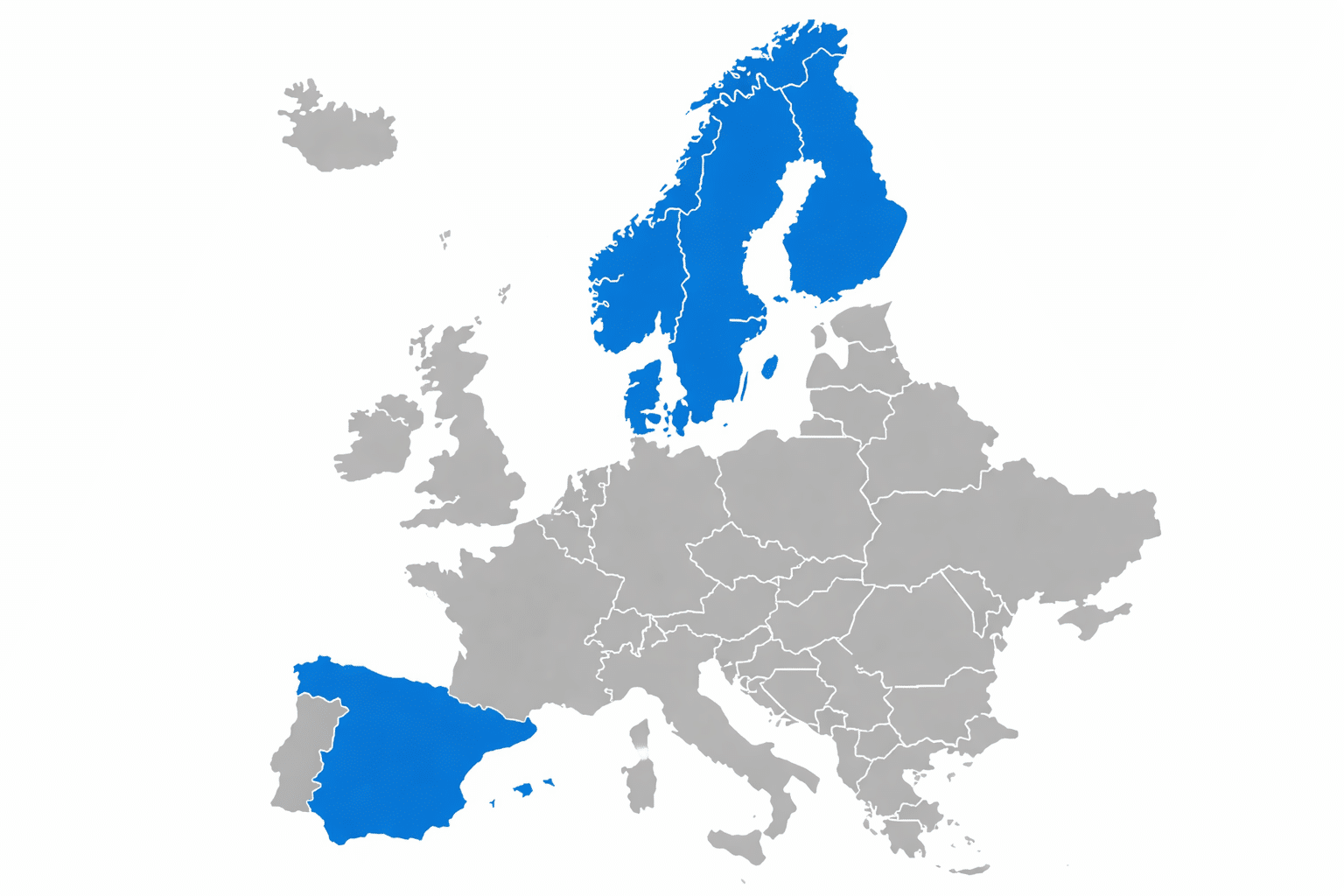
Spain and Sweden apply the EU Succession Regulation, while Denmark and Norway do not. This distinction often leads to incorrect assumptions and costly mistakes.
Spanish Forced Heirship Rules
Unlike Scandinavian systems, Spanish law includes forced heirship rules. Certain relatives are legally entitled to a minimum share of the estate.
In many cases:
- children have ownership rights over part of the estate
- the surviving spouse may have usufruct rights
- freedom of testation is limited
These rules may apply even when the heirs live abroad and are unfamiliar with them.
Documents and Formalities Cannot Be Avoided
Spanish inheritance procedures are document-driven.
Even when the inheritance has been dealt with abroad, Spanish authorities usually require:
- a death certificate
- a certificate from the Spanish Wills Registry
- proof of heirship
- tax identification numbers (NIE or NIF)
- a notarial deed of acceptance of inheritance
Missing or incorrect documentation is one of the main causes of delays.
Inheritance Tax and Regional Differences
Inheritance tax in Spain is calculated at regional level, not nationally.
This means that:
- tax outcomes vary significantly depending on where assets are located
- some regions offer very generous reductions
- others impose a higher tax burden
Even when no tax is payable, filing obligations still apply and deadlines are strict.
Why Early Legal Advice Matters
Spanish inheritance law is not intuitive for Scandinavian families.
Differences in procedure, applicable law, documentation and taxation mean that mistakes are often irreversible.
What may seem like a formality can quickly become a legal and financial problem if handled without proper coordination.
If your situation involves Spain and more than one jurisdiction, a structured legal review can prevent costly mistakes — Book a consultation and let a professional handle it.
Want to know more about this subject? Download our full guide on Spanish inheritance tax for Scandinavians: